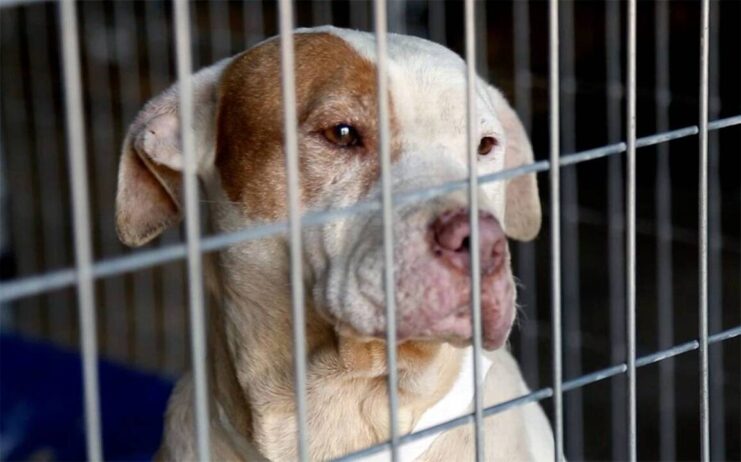
Tag: animals

Zeutering — the non-surgical neutering alternative — hits New Orleans

There’s a new way of neutering, and it’s slowly making its way across the country.

This weekend’s stop on the national tour is the New Orleans area, where local veterinarians and animal advocates will get a chance to learn more about ”Zeutering,” which involves an injection into the testicles of a new zinc-based drug, called Zeuterin.

(Warning to the faint of heart, or the faint of scrotum: The process is shown in the video above.)

ARK Sciences, the manufacturers of Zeuterin, say it could revolutionize the way male dogs are sterilized and help reduce animal overpopulation. The procedure takes only 10 minutes.

Zeuterin has been approved by the FDA for use in dogs from 3 to 10 months old, and Ark Sciences says it anticipates the agency will soon approve it for use in dogs of all ages.

For now, the company, and its nonprofit branch, Ark Charities, Inc., are demonstrating the product and training veterinarians in its use in select cities across the country.

In Ponchatoula this Sunday, veterinarians will have a chance to learn more about the treatment at a presentation sponsored by Ark Charities, Inc. and Friends of the Shelter, an organization based in Hammond, according to the Times-Picayune. At least eight area veterinarians will participate, and gain certification to administer the compound. 

The shot consists of zinc gluconate and arginine and is adminstered to the testicles, killing sperm-producing cells and reducing testosterone by about 50 percent. Testicles, while shrunk, remain visible. Because a Zeutered dog still has his testicles, each dog injected receives a tattoo on his inner thigh, indicating he has received the procedure.

Unlike traditional neutering, general anesthesia is not required — just a mild sedative. No slicing is involved either, meaning quicker recoveries, less risk of infection and much less expense. It costs about $20.

Zeuterin was used in Japan to control the dog population in abandoned areas after the 2011 earthquake and tsunami, and it also met with success in controlling feral dogs in the Philippines.

In the first U.S. clinical study, involving 270 dogs, only 1 percent had adverse reactions to Zeuterin, and half of those were attributed to improper administration.

Zeuterin lowers testosterone rates 41 percent to 52 percent compared to neutering, which eliminates testosterone entirely.

Report calls attention to dog shootings by Houston police


Since January of 2010, Houston police have gunned down 187 dogs, killing 121 of them.

And last year alone, law enforcement officers in Houston and Harris County shot more dogs than New York City police officers shot in 2010 and 2011 combined.

All of those shooting were deemed by police to have been justified, but it’s not too hard to find families that disgree with that.

The KHOU 11 News I-Team did, and its report this week is more evidence that, across the country, requiring police to be trained in dealing with dogs could save dogs, and their families, a lot of pain.

Colorado passed a law requiring that, and it was signed by the governor this week.

The KHOU report, when it looked at the police-involved dog shootings for all of Harris County found at least 228 dogs had been shot by officers and deputies since 2010, 142 of them fatally.

“If the dog turns and comes at a citizen, or the deputy, they have all right to use lethal force,” explained Dpt. Thomas Gilliland of the Harris County Sheriff’s Office.

Records show Harris County deputies shot 38 canines in the last three-and-a-half years.

When asked if all those shootings were justified, Gilliland said: “The justification is, in that matter, and at that moment the deputy had to choose the decision to use lethal force against that animal.”

Sgt. Joseph Guerra, who works as a cruelty investigator for the Houston Humane Society, said it teaches some officers how to safety interact with threatening dogs. But the training isn’t mandated for all officers.

“A lot of times, officers are not sent to training to get that type of certification to feel comfortable enough to deal with these animals,” he said. “We need to get those officers involved in some mandated training in how to defend before going to deadly force.”

The Arlington and Fort Worth Police Departments started mandatory dog training for officers last fall, and state lawmakers are considering a bill that would require the training for officers across Texas.

Stray dog found nursing kitten along creek


An animal control officer in South Carolina responded to a call about a barking dog behind a Home Depot, and was touched when she discovered what all the noise was about.

“This is one example of why I love my job,” officer Michelle Smith said in her report.

A stray dog was nursing a kitten along North Pointe Creek in Anderson.

On Monday, a caller to animal control reported a dog had been barking in the area along the creek since Saturday, Fox Carolina reported

Smith followed the noise and found the dog and kitten at the bottom of a steep embankment.

She took them both to Anderson County P.A.W.S.

Smith said the dog is taking care of the kitten, cleaning and feeding it.

Animal control is hoping either the dog’s owner or whoever adopts her will agree to bring the cat home, too.

School crossing guards to help count dogs

The city of Schenectady is trying to get a handle on how many unlicensed dogs live there, and it’s calling on school crossing guards to help with the counting.

Crossing guards and code enforcement officers, who’ll be sweeping through neighborhoods this summer, anyway, looking for housing code violations, will be conducting Schenectady’s doggy census — aimed at getting a count of how many dogs are in the city.

The next step is making sure their owners have licensed them.

The city, in which only 1,400 dogs are licensed, suspects there could be ten times more that are unlicensed — as many as 15,000. With licenses costing up to $20, the sweep will easily pay for itself down the road.

The problem was getting the city council’s approval for spending $22,000 to hire people to go door to door, inquiring if homeowners have dogs, according to the Albany Times Union.

A surplus in the overtime budget for code enforcement officers and school crossing guards provided a way around that, allowing the city — without the council having to approve new spending — to turn interested crossing guards and code enforcement officers into temporary canine census takers.

City Clerk Chuck Thorne said the census, to be spread out over several summers, could easily lead to a doubling of dog licenses, which would bring in $36,000 to $40,000 in revenue, and that’s not even counting fines.

Licenses are $13.50 for a neutered or spayed dog and $20.50 for an unfixed dog. For seniors, rates are $3.50 for neutered dogs and $10.50 for unneutered. A valid rabies vaccination certificate is needed for a license.

The census takers will determine through interviews if a homeowner has dogs, how many, and whether they are licensed. If a person is not home and there are indications a dog is in the house — such as barking, or a yard strewn with rawhide chews — the census taker will leave a letter stating the person has 21 days to get a license or face a possible ticket.

(Photo: Mayor Gary McCarthy announcing plans to reduce crime, get homes up to code and crack down on unlicensed dogs in Schenectady; by Skip Dickstein / Times Union)

Iowa woman questions shooting of her dog

Far be it from us to suggest Iowa look two states west for a solution to what it may not even consider a problem.

But, if its lawmakers did, they might find some sound thinking behind Colorado’s new law, mandating police officers get some training in how to deal with dogs they encounter on duty — other than just shooting them.

If we were suggesting, we’d suggest every state look into doing something similar, or even better, than the Colorado law. It requires officers undergo three hours of online training in dog behavior, and how to recognize when a dog truly poses a threat.

While Iowa, at first glance, doesn’t seem to have experienced quite as many questionable shootings as Colorado, there have been at least a few instances a year of dogs being shot and killed by police.

There was one in 2012 in Newton, one this year in Allamakee County and one last week in Bettendorf, where Sheila Williams is insisting her dog, Tank (above), posed no threat.

“He wasn’t a ferocious dog,” she said of Tank, her border collie-pit bull mix. “He never bit anyone. He was only a year-and-a-half old. He probably thought the police officer was playing with him,” she told the Quad City Times.

Police Chief Phil Redington said the dog attacked the officer and deadly force was an appropriate response.

On Saturday, Williams’ two dogs, Tank and Cleo, escaped when a gust of wind blew open her door. They had wandered several blocks when they began barking at some dogs at another home.

The owners of that home tried to shoo the two dogs away, and called police when they wouldn’t leave.

The dogs were corraled on the back deck, hemmed in by lawn chairs, when police, and Williams, arrived.

“When he (Tank) saw me, he jumped over one of the chairs, and the officer tried to grab him,” said Williams, who managed to grab hold of her other dog.

The police chief said Tank jumped at the officer “snapping its teeth. The officer brushed the dog away with his arm and the dog attacked again, jumping and snapping at the officer’s face. The officer kicked the dog away, at which time the dog bit his shin, causing minor lacerations. The officer removed his gun and fired at the dog twice. The dog was approximately two feet away when the officer fired in a downward direction.”

“I keep playing the scenario over and over in my mind,” Williams said. ”I blame myself. They shouldn’t have gotten out. Why did he have to shoot him, though? Why not a stun gun or pepper spray?”

Redington said the level of force used to ward off a dog attack is up to an individual officer.

“We all love animals,” he said. “To me, it doesn’t matter if it’s a pit bull, border collie or poodle. If he’s attacking a police officer, the officer should defend himself.”

Tank was taken to a veterinary clinic, where he died.

State Supreme Court to decide Onion’s fate

The Nevada Supreme Court — no stranger to such matters — will decide whether Onion, the Mastiff mix who killed his owner’s grandson on his first birthday, should live or die.

The court will hear arguments — 30 minutes worth, it has specified — on July 3 before deciding whether the city of Henderson should be allowed to kill the dog.

Another option has been offered by the Lexus Project, a New York-based organization that provides legal representation to dogs.

The Lexus Project intervened in the case and wants to gain custody of Onion, then send him to live at a secure sanctuary in Colorado.

The 120-pound mastiff-Rhodesian ridgeback mix killed Jeremiah Eskew-Shahan by biting him on the head the day of his first birthday party. Later that day, the owner turned Onion over to Henderson animal control officers, who planned to kill the dog in accordance with the city’s vicious-dog ordinance.

The city turned down the Lexus Project’s offer to take responsibility for the dog, and has fought its request to be awarded custody. Onion’s former owner now wants Lexus to have the dog, according to the Las Vegas Sun.

The court battle has been going on for a year now.

Last year, Clark County District Court Joanna Kishner ruled the city of Henderson could proceed with the dog’s execution.

The state Supreme Court issued a stay — it’s second in the case — until arguments could be heard.

Those will take place July 3 at 11:30 a.m.

Bulletin: Not everybody loves your dog

Farhad Manjoo doesn’t want to pet your dog.

In fact, he’d prefer it if you’d keep your dog to yourself — out of the park he wants to read in, away from the cafe where he enjoys his Frappuccino, and definitely not in the gym in which he works out.

It was a case of the latter that triggered a well-written, semi-playful, anti-dog diatribe he wrote for Slate last week.

Manjoo argued that dogs are getting too many privileges. He pointed out that not everybody enjoys their presence, cited health hazards they could conceivably pose, and suggested all those people who take their dogs everywhere start leaving them at home.

Not sharing one’s dog? To me, that’s the equivalent of hiding a Van Gogh behind an ironing board in the basement. Or putting a newfound cure for cancer in a time capsule. Or shielding your eyes — just to be safe — from a blazing sunset.

Still, we’d defend Manjoo’s preference to live life without somebody else’s dog in his face. That’s his right. It’s his loss, but it’s also his right.

Manjoo is Slate‘s technology columnist and the author of True Enough: Learning To Live in a Post-Fact Society. So it doesn’t surprise me — he being caught up in all things digital — that he has failed to catch on to or be captivated by the wonder of dogs.

Microchipping aside, dogs and technology are best kept separate. They don’t always get along, maybe because they are the antithesis of each other. Technology may be the cure for everything, but dogs are the cure for technology. We’ll get back to this point, but first let’s look at what Manjoo said — after an unwanted encounter with a Doberman inside his gym.

“The dog came up to me, because in my experience that’s what dogs do when you don’t want them to come up to you. They get up real close, touching you, licking you, theatrically begging you to respond… I guess I was fairly sure he wouldn’t snap and bite me, but stranger things have happened — for instance, dogs snapping and biting people all the time. 

“Why was this dog here? And why was no one perturbed that this dog was here?

“…No one was asking because no one could ask. Sometime in the last decade, dogs achieved dominion over urban America. They are everywhere now, allowed in places that used to belong exclusively to humans, and sometimes only to human adults: the office, restaurants, museums, buses, trains, malls, supermarkets, barber shops, banks, post offices… Dogs are frequently allowed to wander off leash, to run toward you and around you, to run across the baseball field or basketball court, to get up in your grill. Even worse than the dogs are the owners, who seem never to consider whether there may be people in the gym/office/restaurant/museum who do not care to be in close proximity to their dogs. …”

Manjoo admits to not being a dog person, but at least — unlike most anti-dog types — he has a sense of humor about it.

“It’s not that I actively despise mutts; I just don’t have much time for them, in the same way I don’t have time for crossword puzzles or Maroon 5,” he writes.

“But here’s my problem: There’s now a cultural assumption that everyone must love dogs. Dog owners are rarely forced to reckon with the idea that there are people who aren’t enthralled by their furry friends, and that taking their dogs everywhere might not be completely pleasant for these folks.”

And seldom, he points out, does anyone whose dog accosts him say they’re sorry.

“… I can promise you she won’t apologize for the imposition. Nor will she ask you if you mind her dog doing what he’s doing. Nor will she pull on its leash, because there won’t be a leash, this being an office, where dogs are as welcome as Wi-Fi and free coffee.”

The same holds true, he notes, at coffee houses.

Here we should point out that the dog pictured atop this post is mine, and that, in the photo, Ace is enjoying an iced coffee product at Starbucks, offered to him by a customer whose behavior indicated she wanted him to visit her table.

When I take Ace to a Starbucks, or most anywhere else, it’s usually pretty apparent who wants to meet him and who doesn’t, and I restrain him accordingly. I don’t have to compile any data or crunch any numbers, I can just tell. It’s not brain surgery, or computer science.

Even though most people go to Starbucks for the free Wi-Fi, or the expensive coffee, I’d estimate about one of two customers wants to meet my dog. Ace — and this isn’t true of every dog — has a way of figuring that out himself, and generally will avoid those who show no interest in him, unless they are in the process of eating a muffin or pastry, in which case he’s willing to overlook the fact they may not be dog lovers.

What makes the numbers even more impressive is that 8 of every 10 customers at your typical Starbucks are under the spell of their computer device and not at all cognizant of what’s going on around them.

Ace is sometimes able to break that spell, at least he does for me.

As for me, I’d rather have access to Fido then Wi-Fi anyday. Fido will soothe me. Wi-Fi will likely, at some point, make me angry and frustrated. Fido will focus me. Wi-Fi will distract me. Wi-Fi will accost me with uninvited and intrusive messages, and send me alerts, and remind me of all the things I need to do today.  Fido will remind me all those things aren’t really that important and can wait until tomorrow. Wi-Fi will take me out of the moment; Fido will keep me in it. Wi-fi has no soul. Fido does, and his presence allows our souls – those of us who have them — to be refreshed. Dogs keep us from becoming an entirely manic society.

No one, if I have my laptop on, will want to come up and pet it, except maybe Farhad Manjoo, who — while not having the least bit of interest in my dog — is probably curious about my gigabytes and apps.

On this much I will agree with Manjoo: There are dog owners who seem unaware that not everybody will delight in their dog, oblivious to the fact that some might find their dog annoying and intrusive. Similarly, though, there are parents of children who don’t realize not everybody will delight in their antics. Similarly, too, there are grown-up people who fail to realize that they themselves are annoying and who we’d prefer not to have inflicted upon us.

Unfortunately, we can’t just ban them. Our choices are limited. We could work on being tolerant –  of all ages, sizes, shapes and species, despite their noise, intrusiveness and abrasiveness levels. Or we could go somewhere else. Or we could complain.

Sometimes, when visiting a Starbucks or other coffee place, I wonder if I should lodge an official complaint with management about Wi-Fi — objecting to its omnipresence, and how it seems to be turning people into keyboard-pushing zombies.

“No,” I’d say, “I’m not technically allergic to it, but I’m uncomfortable with it near. I’ve had some bad experiences with it. Sometimes it bites people when they least expect it, and I’m pretty sure it harbors germs.”

“But it’s wireless,” the manager might say.

“Exactly,” I’d say with a huff. “Put a leash on it.”

Colorado law, aimed at reducing dog shootings, requires police to get training

Colorado Gov. John Hickenlooper signed a new law yesterday that will require police officers statewide to undergo training in how to deal with dogs.

Dog lovers have been pushing for the measure in light of recent fatal pet shootings by law enforcement officers, some of which were widely viewed as questionable and might have been preventable if officers had more knowledge of dogs and were better able to determine when they posed a true threat.

During debate on the bill, lawmakers said 37 dogs have been shot by officers in Colorado over the last five years.

“The idea here is to keep officers and animals safe,” Hickenlooper said. The governor brought his dog, Skye — a shelter mutt who is part Akita, part bulldog, part chow chow – along for the bill signing.

Also on Monday, the Colorado legislature proclaimed shelter dogs and cats as the official state pets, approving a proposal presented by schoolchildren as part of a program to teach them about the legislative process.

The training legislation mandates that sheriffs’ offices and police departments offer three hours of online training on recognizing dog behaviors and employing non-lethal control methods, according to the Associated Press. The law also directs authorities to give dog owners the option to control or remove their dogs when officers respond to a call concerning a nonviolent crime.  The training must be in place by Sept. 1, 2014.

The bill — believed to be the first of its kind – was unanimously approved.

(Photo: Brittany Moore with Ava, her German shepherd, who was shot and killed by an Erie, Colo., police officer in May 2011)

Take two dogs and call me in the morning

Call it an “aha” moment for the AHA: The American Heart Association has finally, officially, recognized that dogs are good for the ticker.

Last week, the organization issued a statement saying enough evidence now exists to make that assertion, and it didn’t even recommend dogs be taken in moderation, or consulting your doctor first.

Heartening as the news release was, the statement was overdue, or at least a few beats behind the thinking of those of us who already knew, and didn’t need studies to tell us, that our dogs are good for the heart, by which I mean the organ and more.

Dog owners are more likely to get exercise. Stroking a dog lowers blood pressure. Stress is handled better by dog owners — even when their dog isn’t with them. Studies have proven all those things.

But the mysteries of what dogs do for the heart, and the soul, have only begun to be unraveled. And on top of all the benefits to humans that can be scientifically confirmed and quantified, there’s much more dogs do for us — much of it undetectable by microscopes and double-blind studies, and part of me hopes it always will be.

Being humans, we can sometimes get so wrapped in measuring something that it interferes with treasuring that something. We can get so intent on delving into something’s complexities that we fail to savor its simplicity.

Dogs, could they speak, would tell us that, and they’d likely advise to look for the simple answer first.

How important, heart-wise, is the simple fact that a dog can give us reason to live, and love? While I am not a medical professional, or even a medical amateur, I think a heart that’s engaged and occupied is more likely to keep running smoothly than one sitting empty in the garage, getting dusty.

“Perhaps when one owns a pet one tends to be happier,” said Dr. Glenn Levine of Baylor College of Medicine in Houston, who led the committee that wrote the statement. “Pet owners might be more likely to take their medications and eat healthier meals.”

Pharmaceuticals and spinach, important as they may be, don’t make you happy to be alive, though, and want to continue in that state.

Dogs do.

The AHA isn’t saying everyone should go out and adopt a dog to lower their risk of heart disease. The statement emphasizes there’s much more involved in keeping your heart healthy, according to an NBC Today report.

“We did not want people to see this article and just go out and adopt or rescue or buy a dog …while they continue to just sit on the couch and smoke cigarettes,” said Levine, himself a dog owner.

In one study cited by the committee, researchers signed up 30 people with borderline high blood pressure who were about to adopt dogs from a shelter.

Then they persuaded half of them to wait — in the best interest of the study, if not the dogs.

Those allowed to adopt dogs right away had lower blood pressure two and five months later than those who had not adopted.

And once all the study participants had adopted dogs, systolic blood pressure was found to be lowered in the deferred-adoption group as well.

The study didn’t say whether those that adopted had lower blood pressure than those who bought dogs. Nevertheless, and even though I’m not a doctor, that’s what I’d prescribe.

(Photo: ohmidog!)

An Act of Dog: A memorial to the millions of shelter dogs put down in America


It’s easy to ignore statistics. They’re cold and dry and lack soulful eyes. And when the numbers are overwhelming — like the 5,500 unwanted dogs who are put to death daily in U.S. shelters — we tend, as a rule, to find life is more comfortable and less depressing when we don’t do the math.

Louisville artist Mark Barone is an exception to that rule. Rather than ignore the problem, he decided to put a face on it — 5,500 of them, in fact.

For two years now, he has been painting portraits of dogs who have been put down at shelters across the country, and he’s more than halfway to his goal: 5,500 portraits that he hopes will someday — unlike their subjects — find a forever home.

Barone and his partner, Marina Dervan, call the project “An Act of Dog.”

Their hope is the works will someday be displayed in a permanent memorial museum, which — between its emotional impact and the funds it would help raise for no-kill rescues and shelters – could help lead to their larger goal,  a no-kill nation.

Mark, a well-established artist, had moved to Santa Fe when, about three years ago, he lost his dog of 21 years, Santina.

“It was kind of a sad time, and I thought it would be therapeutic for Mark to go to the dog park,” Marina recalled. “I thought it would be helpful for him to get some dog love, and it was. It was really great. It got me in the mood to think about adopting another dog. Mark wasn’t at that stage, but it didn’t stop me from looking.”

Looking for adoptable dogs online and at local shelters, she quickly learned the sad reality that she says neither she nor Mark, up to then, were aware of — that millions of dogs in need of homes are put down at shelters every year.

“Instead of finding a dog, I found out all these horrifying statistics,” she said. She shared them with Mark, along with images and videos of dogs who had been, or were on the verge of, being put down.

He asked her to stop sharing, but she kept up.

“If we don’t look at it, nothing will change,” she said. “So he looked at it, as painful as it was, and day or two later, we were standing in the kitchen and he asked me the number of dogs killed everyday in the country … I gave him the number 5,500, based on statistics from Best Friends.”

It was then that the idea of honoring shelter dogs by painting 5,500 portraits of those who had been killed was born, and along with it, the longer term plan of a memorial museum, along the lines of the Vietnam Memorial and the Holocaust Museum.

First, they started looking for the studio space to get started on the task, mailing out inquiries in search of a city or town that might offer free space for him to paint.

Santa Fe wasn’t interested. Louisville was among about 30 places that were.

That’s where the couple lives now, and where Mark has completed about 3,200 of the portraits — some of them life- sized, some of them larger.

“It’s the big ones, 8 feet by 8 feet, that slow things down,” Mark said.

Only one of the 8×8-foot paintings depicts a dog who died a natural death — Mark’s dog, Santina. According to Marina, Santina will serve as the gatekeeper of the exhibit. Other large portraits feature  Batman, a 10-year-old pit bull who was left outside in 21 degree weather, and was found dead at a shelter the next morning, and Grant, who was deemed unadoptable due food bowl aggression and put down.

The large paintings — there will be 10 of them — will include the individual stories of those dogs, representing the most common reasons shelters give to put animals down.

“It’s pretty much the wall of shame,” Marina said.

Mark and Marina are still looking for a permanent place to house the works, and for sponsors and benefactors for the museum, and they have some promising leads, both in Louisville and around the country. In addition to being an educational center, the museum would also be an outlet for selling merchandise that features the images – shirts, cards, and other products. An Act of Dog, which is a nonprofit organization, would pass on all profits to no-kill facilities and rescue groups.

The dogs in the paintings come from shelters all around the country. Their photos are submitted by rescue groups, volunteers and shelter employees. They have all been put down.

Mark and Marina object to the use of the term “euthanized” when it’s applied to healthy animals. “Deliberately ending the life of a healthy and treatable pet is killing.  Deliberately ending the life of a medically hopeless and suffering pet is euthanasia,” Marina said. They don’t much like “put to sleep,” either.

“Semantics are a powerful way to keep people from the truth and our mission is to show reality without the candy wrapping,” she added.

Mark paints everyday, from sunrise to sunset. At night, he and Marina work on the An Act of Dog website. They’re both foregoing salaries at this point.

Mark has served as a consultant to cities interested in using the arts to revitalize blighted areas, among them Paducah, Kentucky, and its Paducah Artist Re-locaton Program. Marina worked 20 years coaching corporate executives.  

Now they’ve cashed in their retirement savings and are devoting full time to the project.

“We could turn away and pretend like we didn’t see what we saw, or we could do something about it,” she added. “If that means we have to live poor,  we’re OK with that, because we know we did something.”

They’re working now in studio space provided by the Mellwood Art Center in Louisville, where they did end up adopting a new dog, named Gigi, from a local shelter.

What drives the couple, though, are all the dogs who don’t get out alive — the thousands put down each day.

“The no-kill movement is making strides, but not fast enough,” said Mark who, on those days he doesn’t feel like painting, reminds himself of the bleak numbers, and the 5,500 reasons — every day — he must continue.

To learn more about An Act of Dog, and how to become a sponsor or benefactor, visit its Facebook page or the An Act of Dog website.

(Photos and video courtesy of An Act of Dog: At top, a collage of Mark’s paintings; Mark and Marina in their studio; some of the larger paintings, with Mark’s former dog, Santina, at left; and three shelter dogs dogs Breeze, Freckles and Sky)